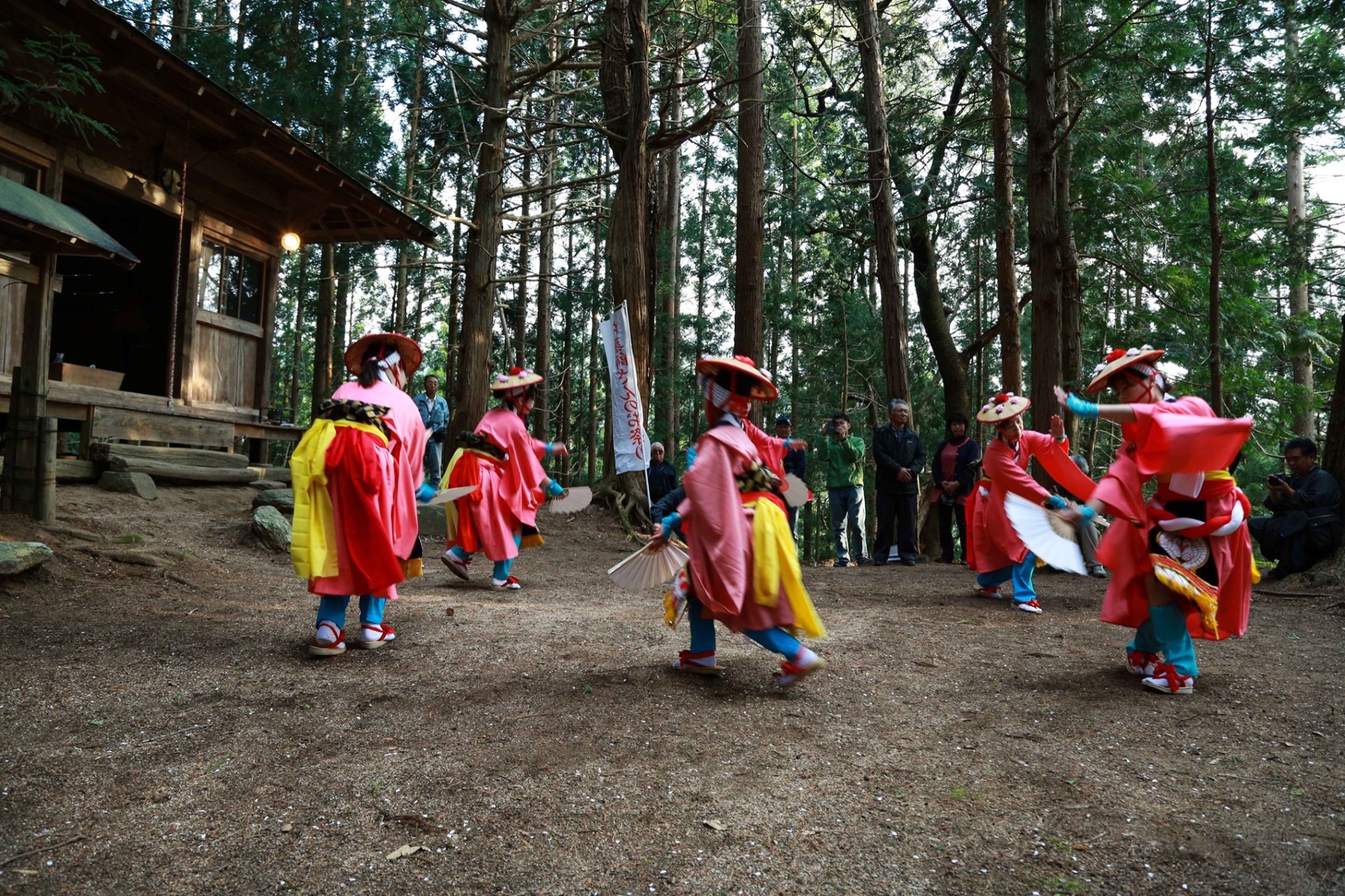
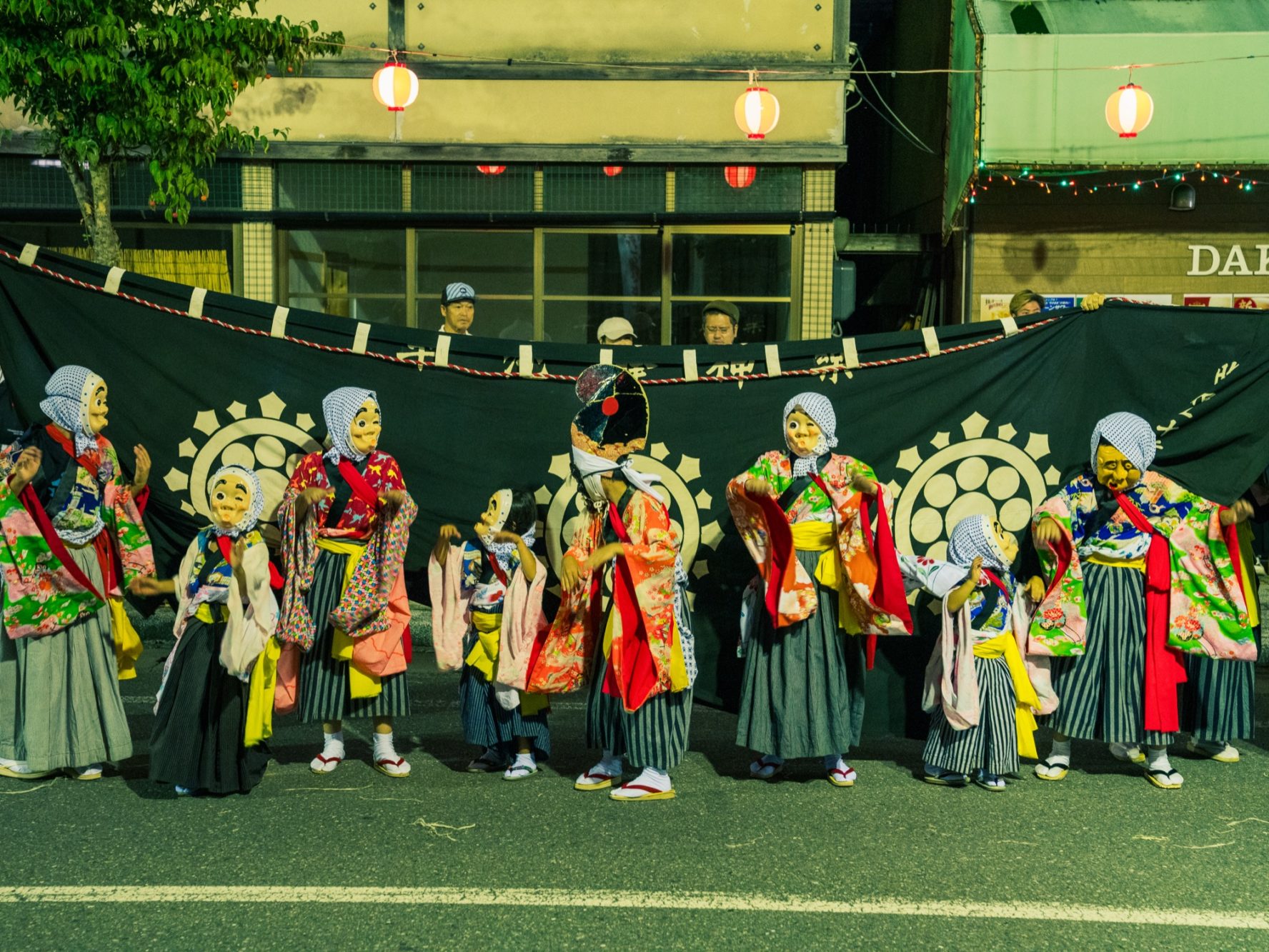
Iwate Prefecture possesses the richest folk tradition in Japan. There are various folk traditions rooted in the everyday life of Tōno, with nearly half the city’s residents involved in some form of folk tradition group. Today, sixty active groups perform Kagura, a prayer to the mountain gods; Shishi Odori, expressing the intertwined relationship between animals and humans; dances for rice planting; and prayers for a bountiful harvest. Each small mountain, village, or street has its own dance, such as Nanbu Hayashi, Sansa dance, or Ōokagura.
Performances are dedicated to local shrines and events, mainly during the summer. The Tōno Festival in September brings all groups across the city together, filling the town with lively sounds and colourful costumes, including mikoshi (a palanquin to carry the sacred object from the shrine into the midst of the festival) and yabusame (mounted archery). The splendour and extravagance epitomise the festival of traditional performance.
As mentioned elsewhere in this text, Tōno has an abundance of local performing arts due to its extremely cold winters. Praying for a bountiful harvest is a daily practice, and the joy and energy that carry across winter into spring peak around summer and autumn, when crops ripen. Having the greatest temperature variation on Japan’s main island possibly fosters the variety and vitality of local performing arts.
Many of the local performing arts passed down in Tōno did not originate here, but were brought in from outside the area. Tōno has functioned as a post town since ancient times and has witnessed an influx of various cultures as people have come and gone – accepting outside cultures and allowing them to develop within the basin. Tōno’s Shishi Odori is a blend of sacred mountain dance and rice planting dance, reflecting Tōno’s flexibility in accepting and adapting various cultures. Just as the book “The Legends of Tōno” takes the form of a collection of various folk tales from across and beyond the mountains, over sixty local performing arts have established their unique styles and taken root.
It is also believed that one reason performing arts have endured to this day is the role they play in bringing the community together. Many rehearsals are held from summer to autumn, with participants wearing the same costumes and dancing to the same rhythm. This series of activities builds a sense of unity and shared identity within the community. Naturally, people want to look more impressive and stand out from neighbouring villages. Everyone believes their neighbourhood is the best, even if they do not say so aloud.
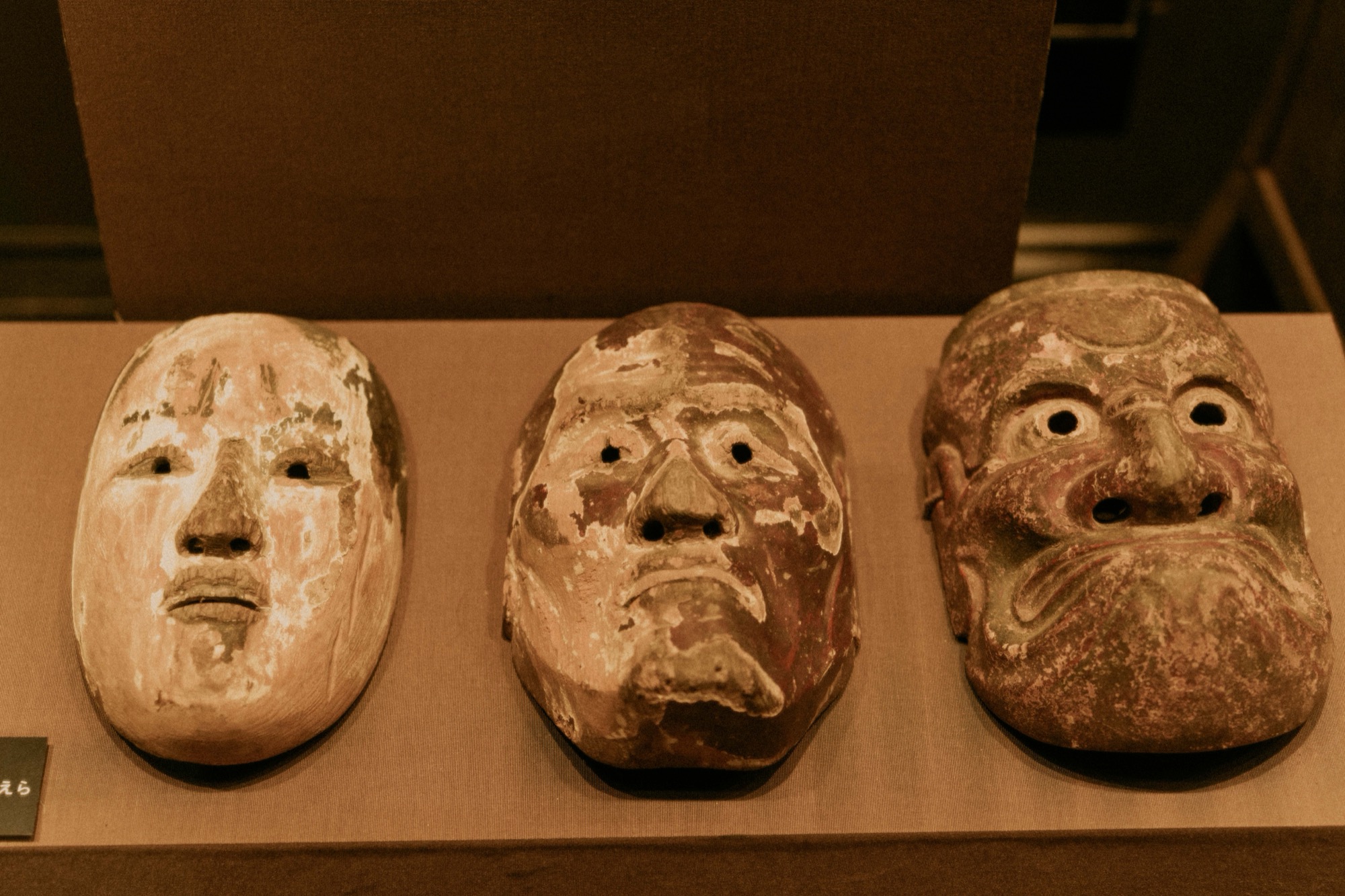
Another reason may be that it allows people to experience something extraordinary. For the people of Tōno living in a basin surrounded by mountains, unable to move about as freely as they do today, festivals and opportunities to transform into something other than themselves – such as Shishi or the deities of Kagura – were special experiences, allowing them to feel the extraordinary without having to travel. The local performing arts, which allow people to transform into something they are not, such as a deity, must have been a much-desired opportunity. Perhaps this was a means for people who could not live apart from the land to endure.
Many groups face the risk of disappearing due to recent population decline, and an increasing number are actively welcoming newcomers and outsiders who participate only during festivals. It is not as difficult to join as many other traditional performing arts; on the contrary, people are warmly welcomed. If interested, feel free to become involved not only as a dancer but also as a drummer, flute player, or in other roles within the group. Entering the circle of performing arts that have continued for hundreds of years, treading on the local soil, dancing, and creating sounds with the local people is the best way to feel connected to the land.
RCulture Bites
1Kagura
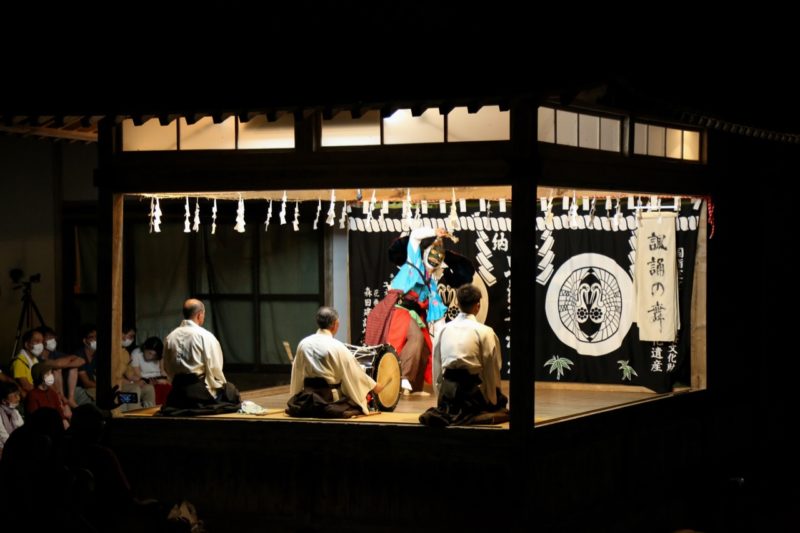
A performing art practiced throughout Japan, in which a seat for a deity is prepared to invite them, and a person embodies the deity to offer prayers and make oracles. They offer prayers for exorcism, purification, and a rich harvest. Amongst Tōno’s local performing arts, it has the largest number of archival records and is highly diverse.
RCulture Bites
2Shishi Odori
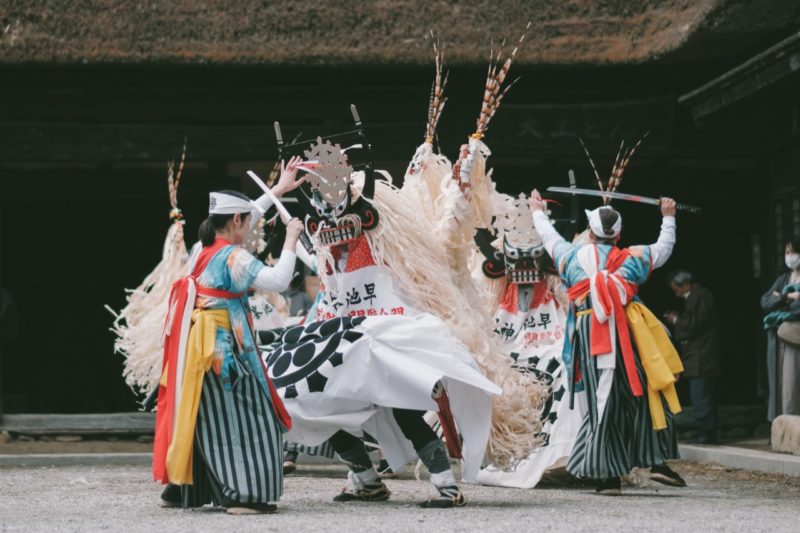
A folk tradition that arrived in Tōno four centuries ago. It is written either as “The Deer Dance” or “The Lion Dance” – deer and lion share the same phonetics, Shishi, in Japanese. In Tōno, a mystic beast, Shishi, and a sword dancer perform, suggesting that the dance conveys the antagonism and harmony between humans and nature. Shishi Odori is said to have originated as part of memorial services for hunted four-legged animals, such as deer and boar. Today, the dance is performed in diverse styles across northeastern Japan.
RCulture Bites
3Rice Planting Dance
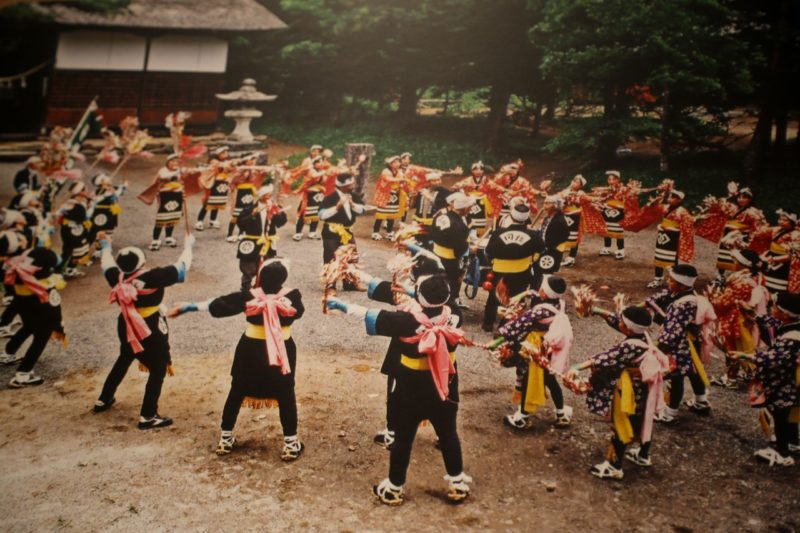
A dance that has existed since ancient times to pray for a rich harvest and to celebrate the joy of farming, even in years when the harvest is poor. The dances express the tasks and narratives involved in rice cultivation, such as sowing seeds and transplanting seedlings.
RCulture Bites
4Nambu Bayashi (Nambu’s Music)
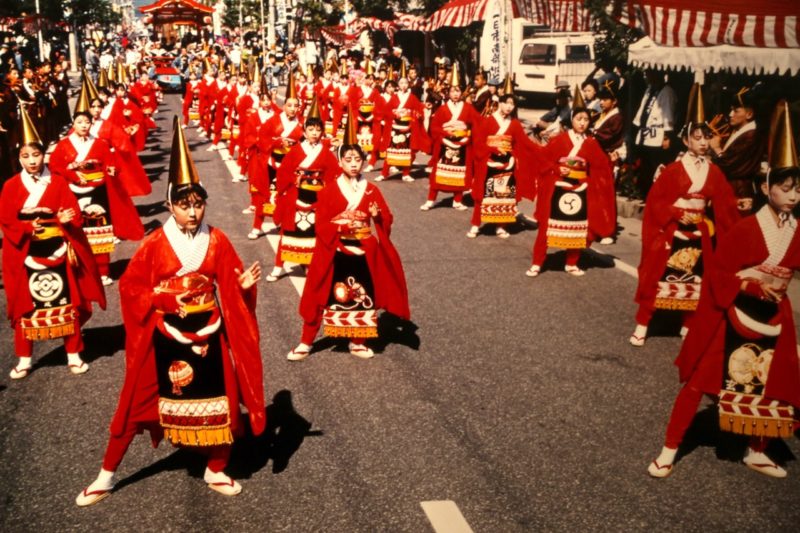
The Tōno Nambu clan, who ruled Tōno during the Edo period, commissioned entertainers to create this local performing art, unique to Tōno and incorporating regional characteristics, drawing on Kyoto’s Gion Bayashi.
RSite
1Tōno Festival
Every year, on a weekend in mid-September, sixty performance groups with diverse styles gather together. The sight of the town brimming with colourful garments and lively melodies is indeed reminiscent of the otherworld.

RSite
2Annual festivals
Annual festivals are held at shrines throughout Tōno City from July to September. They are often held in the morning, and after the ritual, a Shishi Odori or Kagura is offered by local groups. Different from entertainment spectacles, you can witness traditional festivals in their original form and experience local performing arts as dedicated offerings to nature.
